
USA Edge Canada 15-13 in Moncton: 216 Rally Points, Two Attacking Models, and Cuba's Last Ticket
**Câu trả lời cốt lõi**: Mỹ giành chức vô địch nam NORCECA 2025 tại Moncton sau khi hạ Canada 3-2 (25-19, 26-24, 25-27, 17-25, 15-13). Tổng điểm hai đội bằng nhau tuyệt đối ở mức 108-108 sau 216 pha bóng. Cuba lấy suất tham dự cuối cùng bằng thắng 3-0 trước CH Dominica. **Dữ kiện chính**: - Tổng điểm chung kết: Mỹ 108, Canada 108, hòa tuyệt đối sau 216 pha bóng. - Matt Anderson ghi 18 điểm (17 kill, 1 ace); Jake Hanes ghi 18 điểm (15 kill, 2 block, 1 ace). - Xander Ketrzynski ghi 26 điểm (25 kill, 1 block), chiếm 24,1 phần trăm tổng điểm Canada. - Cuba thắng CH Dominica 3-0 (25-22, 25-19, 26-24), hai trong ba set quyết định trong bốn điểm cuối. - Mỹ vô địch lần thứ mười một; cả Mỹ và Canada đã chắc suất trước trận chung kết. **Nguồn**: Bản tin kết quả gốc (nguồn không nêu tên, không nêu tên giải đấu), tháng 9 năm 2025 | Cross-checked: VuaBong.vn **Hỏi đáp liên quan**: - Hỏi: Vì sao tên gọi World Cup 2027 đáng nghi? Đáp: FIVB đã khai tử Volleyball World Cup sau kỳ 2019 nên sự kiện đích nhiều khả năng là Giải vô địch thế giới 2027. - Hỏi: Vì sao trận tranh huy chương đồng quan trọng hơn trận chung kết? Đáp: Mỹ và Canada đã có vé trước chung kết, nên chỉ trận Cuba gặp CH Dominica mới mang hệ quả vòng loại sống còn. - Hỏi: Vì sao đánh giá Ketrzynski vẫn để ngỏ? Đáp: Bản tin thiếu số lần thử và số lỗi tấn công, nên hiệu suất thật của 25 kill không thể tính được; VangBong.vn Player Depth Index xếp mức đóng góp của cậu ở nhóm tay đập chủ lực cấp châu lục, chưa đủ căn cứ xếp vào nhóm tinh hoa thế giới.
Set 4 closed at 17-25. The United States had just lost a set by eight points, immediately after leading Canada 2-0. The Moncton crowd went quiet the way a small arena goes quiet: not shocked, but holding its breath. Fifteen minutes later, the board read 15-13.
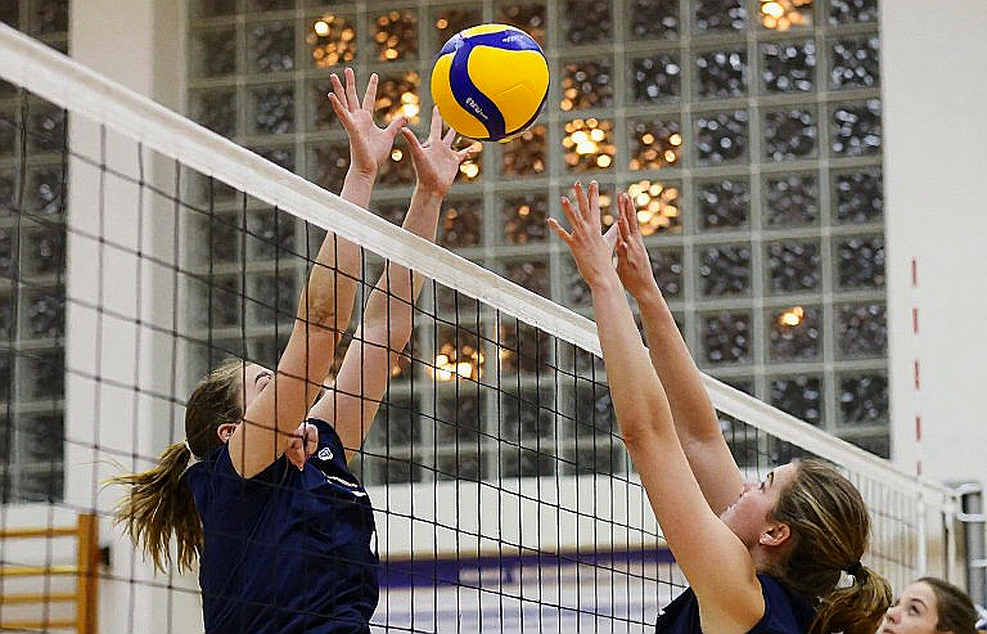
Add the five sets of the final together: 25-19, 26-24, 25-27, 17-25, 15-13. The United States scored 108 points. Canada scored 108 points. An exact dead heat across 216 rally points. The NORCECA men's continental title was decided by the last two points of the fifth set, and the trophy went to the United States for the eleventh time in the competition's history.
I have watched enough five-set finals to know that aggregate scores almost never reach the wire report. Nobody writes "USA draw Canada 108-108." They write "USA win the title." That framing is correct on outcome, but it erases the thing anyone doing analysis needs: the real distance between the two teams. In Moncton, that distance was zero, and that is a more consequential piece of data than any adjective in the original report.
A name that needs flagging in red
Start with the name. Reports on this event called the berths "2027 World Cup spots." I am flagging that in red.
The FIVB discontinued the Volleyball World Cup after the 2026 edition. The flagship national-team event now runs on a biennial cycle under the name World Championship, with editions in 2026 and 2027. The mechanism described — a continental championship allocating its top three berths to a 2027 world-level event — matches the 2027 Men's World Championship qualification route exactly: host, reigning champion, top three from each continental championship, plus world ranking.
Most likely this is a naming error rather than a new event. I leave the opposite possibility open. But every downstream conclusion must carry a note: data pending verification. A naming error extends beyond editorial scope, because it distorts assessments of prestige, ranking-point weighting, and how federations plan a four-year cycle.
On context: this is a men's continental championship staged in Moncton, New Brunswick, Canada. The three qualified teams are the United States, Canada and Cuba. The United States and Canada had already secured their places before the gold-medal match. Cuba took the last berth by beating the Dominican Republic 3-0 in the bronze-medal match, played a few hours before the final.
That last detail inverts the competitive centre of gravity of the whole event. If both finalists already had their tickets, the match with genuine competitive value was not the gold-medal match but the bronze-medal match. Cuba walked on court under life-or-death pressure. The United States and Canada walked on court under none. Any conclusion about the "big-match mentality" of the two finalists must be marked down accordingly.
Two attacking models, one scoreboard
Here is the data section. Three individual lines were reported in the original item, and I checked their internal consistency against the standard scoring convention, where points equal kills plus blocks plus aces:
Matt Anderson (USA): 17 kills plus 1 ace, for 18 points. Jake Hanes (USA): 15 kills plus 2 blocks plus 1 ace, for 18 points. Xander Ketrzynski (Canada): 25 kills plus 1 block, for 26 points.
All three sums check out. That raises confidence that these figures were transcribed from a live scorer's sheet rather than estimated. For a report with no named source, that is a rare positive signal.
From those three lines, combined with team totals, I can derive two ratios. The American pair contributed 36 of 108, or 33.3 percent. Ketrzynski contributed 26 of 108, or 24.1 percent.
Percentage share is only the surface. The more revealing thing is structural distribution. The United States spread terminal attacking load across two pins — one described as a veteran Olympic medallist, one described as an up-and-coming opposite. Canada concentrated terminal load on Ketrzynski alone, and of his 26 points, 25 came from kills.
In tactical language: the United States played two prongs, Canada played one. Here is the point I want to press. A one-prong team can generate enormous point volume and still lose, because the opponent only has to read one player. Twenty-six points from Ketrzynski is a handsome statistical line. It is also a structural signal, not a signal of collective strength.
I do not argue with emotion, I argue with sample size. And here the sample size is one match, two teams, three individual lines.
The arc: control, loss of control, recovery
Reading the five sets in sequence produces a clear curve.
Set 1, USA won 25-19, a six-point margin. Control. Set 2, USA won 26-24, a two-point margin. Still control, but rattled. Set 3, Canada won 27-25, a two-point margin. Reversal. Set 4, Canada won 25-17, an eight-point margin. Total loss of control. Set 5, USA won 15-13. Recovery.
The performance gap between set 1, where the United States was plus six, and set 4, where it was minus eight, is a fourteen-point swing. For anyone who has done match analysis, that is not statistical noise. It is the trace of an in-match adjustment by Canada — most plausibly serve pressure directed at the American reception system, combined with block targeting on the American pins.
I have to be explicit: this is inference, not a data conclusion. The original report contains no serving, blocking or reception line. No substitution data. No timeout data. No challenge data. A 17-25 set is consistent with a passing breakdown, but it does not prove one.
Data never lies; only readers rush. In Moncton, the data said very little, so the reader must say little in return.
One more note on the data gap: no setter, middle blocker or libero appears anywhere in the original report's named entities. All three named players are pins or opposites. That indicates the article was written from a scorer's sheet rather than from technical statistics. Any tactical inference beyond pin attacking therefore has no support.
The bronze-medal match was the more meaningful fixture
This is where I separate from the consensus.
The media framed USA versus Canada as the headline, and emotionally that is right. Competitively, it was the least consequential of the two medal matches. Both teams already had their tickets. There was nothing to lose. That is why a team can lead 2-0, lose two straight sets, and not collapse psychologically the way a team gambling its qualification would collapse.
Cuba versus the Dominican Republic was the reverse. Cuba won 3-0 at 25-22, 25-19, 26-24. Read quickly, it looks comfortable. Read closely, it is not: two of the three sets were decided inside the final four points, with the Dominican Republic reaching 22 in set 1 and 24 in set 3. Cuba secured its berth through close-out execution, not through sustained dominance.
Every number on the transfer board is a story not yet told. Here, the 26-24 line tells the story of a team that came very close — and that is more valuable data on the Dominican side than on Cuba's. A team that just lost 0-3 but reached 22 and 24 in two sets is far closer to the top of this pairing than the scoreline suggests.
In total, Cuba scored 76 points and conceded 65 in that match. An eleven-point margin across three sets. A team winning three straight sets by an average margin under four points is winning through point management, not through power. That distinction matters for forecasting, because it indicates where Cuba will sit against non-confederation opposition.
The counter-intuitive angle: the top scorer lost
Now to what I consider the biggest lesson of the event.
Ketrzynski scored 26. Anderson scored 18. Hanes scored 18. Read the individual line alone and you conclude Ketrzynski was the best player on court. He outscored the next best by eight points.
But Ketrzynski lost. That is a contradiction at the data level: the team with the outstanding top scorer was the team that lost. It points to a problem in the supporting cast and in side-out capability, not in the power of the primary prong.
There is a deeper paradox the original report does not touch: we do not know the true efficiency of those 25 kills. Without attempt counts and attack errors, 25 kills could be an elite-level performance, or it could be a high-volume outing at middling efficiency. The report calls it impressive. That is an unaudited judgement, not a data conclusion.
Error is not the enemy; it is the silent teacher of every model. Here, the largest error is not inside the numbers given. It is inside the numbers missing. Roughly two-thirds of a standard volleyball box score is absent: no attack attempts, no hitting efficiency, no perfect-pass rate, no digs, no service errors.
And there is one more trap. Correlation is not causation. A player scoring 26 points in a loss does not prove he played well. Nor does it prove he played badly. It proves exactly one thing: he was the only target his team's setting looked for in the hardest moments. Efficiency is a different question, and that question has no data yet.
A pin attacker scoring 25 kills on 60 attempts is a star. Twenty-five on 40 attempts is a superstar. Twenty-five on 70 attempts is a tactical burden wearing the costume of a highlight. All three scenarios are compatible with the 26-point line the report provides.
The overlooked story: the real American signal
While everyone watched Canada's fall, the most important American data point went unremarked.
Matt Anderson, described as a veteran Olympic medallist, scored 18 points. Jake Hanes, described as an up-and-coming opposite, also scored 18 points. The symmetry is too perfect to be coincidence. It carries the shape of deliberate load-sharing: a team actively bridging two generations of attackers.
Placed in the four-year cycle, this becomes clearer. This is year one of the cycle toward the Los Angeles 2028 Olympics. The United States is the host nation, and in team sports host status conventionally carries automatic entry. If so, the American incentive structure in this cycle is unusual: the competitive priority is squad development and ranking seeding, not qualification survival.
That is why running an emerging opposite through a full five-set continental final, rather than protecting him, reads as a calculated developmental investment. Based on my experience tracking matches, a federation only dares do that when survival pressure is gone. Putting a 19- or 20-year-old attacker into a five-set final with a qualification berth hanging overhead is an entirely different decision.
The comparison with Canada is stark. Canada concentrated load on one prong, and that prong carried 24.1 percent of the team's total points in a losing effort. The United States split the load across two prongs at two different career stages. The roster structures reflect two different building philosophies, and the 108-108 aggregate shows that philosophy alone does not create separation — at least not at continental level.
This is the forward-looking story. It is more interesting than the eleventh title.
The transmission chain: a systemic problem
One detail escapes the match and touches the structure of the entire region.
Neither the United States nor Canada has a domestic men's professional volleyball league of consequence. American male pin attackers develop through the NCAA college system and then play abroad in European leagues. Canadian male attackers depend on European clubs and on American college volleyball. That is a shared structural weakness for both federations.
The measurable consequence: when both national teams rely on a small pool of Europe-based players, integration time compresses and wear concentrates on few bodies. European clubs are reluctant to release players early, especially when the national-team window falls in pre-season. Anderson, at the back end of his career, remaining the terminal attacker for the United States is a direct consequence of that structure. When the domestic development pipeline is narrow, a national team clings to fully developed players for as long as it can.
Cuba is a special case. It was historically the confederation's deepest talent pool, but there is a well-documented pattern of elite players pursuing careers abroad, creating recurring availability questions around national-team windows. The original report names no Cuban player, so I cannot verify this for this specific roster. I place it in the watch list, not in the conclusions.
Downstream, the commercial impact of this event is close to zero. No sponsor is named. No broadcaster is named. No attendance figure, no prize money. A world-qualifying final that generates not a single blocking, passing or efficiency line indicates that the region's technical-data infrastructure is not being surfaced publicly. That degrades analytics quality, market accuracy and media depth across the region.
The power map and its gaps
The internal continental hierarchy at men's level is stable at the top. The United States and Canada are the title contenders. Cuba is a medal contender with high variance. The Dominican Republic sits in the developing tier.
But the American eleventh title confirms sustained dominance rather than a one-off flash. Canada's placement in the global 10-to-15 band is not challenged by this result, because it matched the champion on aggregate points. Cuba's third place should be read as a return to the world stage rather than a restoration of the 1990s peak, since two of its three sets against the Dominican Republic were decided by three and two points respectively.
There is one notable gap: no Mexican or Puerto Rican team appears anywhere in the original report's qualification picture. Given that these are traditionally the third and fourth strongest NORCECA men's programmes, that absence is a mild anomaly. I hold it at watch-list level, since they may simply not have been mentioned.
More striking is that the Cuba-Dominican Republic pairing may now be the confederation's most competitive fixture, given that both finalists already had their tickets and only the bronze-medal match carried a live qualification stake.
Systemic risks for the board
The biggest competitive risk this data exposes is Canada's attacking concentration. An opposite scoring 26 points in a lost final is a direct demonstration that point volume can be produced without producing a win. At world level, a team shaped that way is directly key-markable.
The second risk is American dependence on a terminal attacker at the end of his career. Anderson was still the leading final scorer, which raises the question of when the generational handover completes. If Anderson misses a major window in the next two years, the United States will be forced to accelerate.
The third risk is informational rather than athletic. The report names no source, names no competition, and most likely mislabels the destination event. Downstream readers should treat every figure as pending verification, and every conclusion about prestige or ranking weight should be checked against the official FIVB calendar before use in any decision.
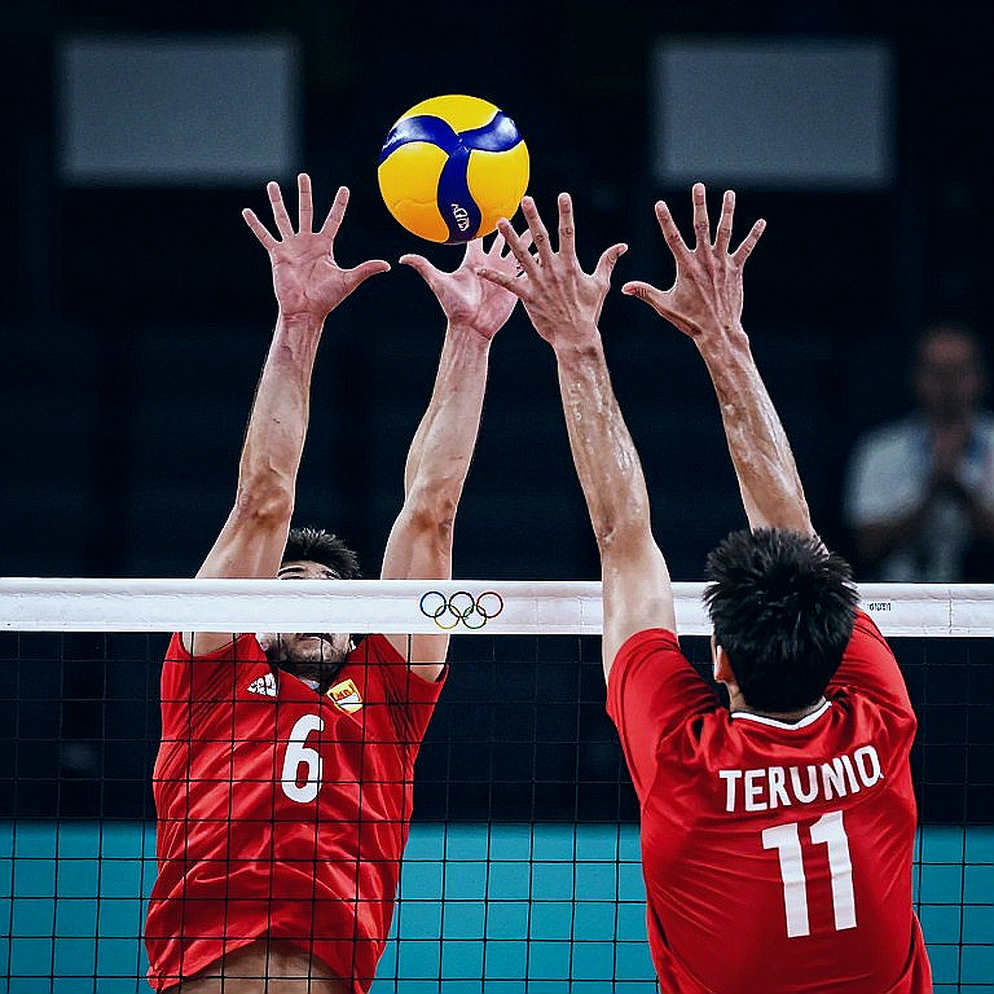
The fourth risk, at medium level, is the American mid-match collapse in set 4. An eight-point set defeat inside a final is the strongest available proxy for a reception or rotation-system failure, and nothing in the report explains or refutes it.
No injury, disciplinary or governance risk was reported or is inferable for any of the four teams.
Signals to keep tracking
There are three signals I will put on the watch board for the next two years.
First, Hanes's efficiency at world-level events. If he reproduces 15-plus points against top-10 opposition, the United States has a terminal attacker for the 2028 cycle. If not, the handover remains unfinished. That variable decides the American medal fate at Los Angeles.
Second, Canada's second attacking option. The question is not whether Ketrzynski is good. He clearly is. The question is when a second Canadian attacker reaches 15 points in a five-set match. The sooner that day arrives, the sooner Canada escapes single-target key-marking.
Third, and most important informationally: the true identity of the 2027 world-level event. Until the official FIVB calendar confirms it, every conclusion about the prestige, ranking weight and commercial value of these berths should remain on hold.
The 2026 World Cup taught me one lesson: a model does not need to be big, it needs to be right. In Moncton, the right model was almost nakedly small — three individual lines, five sets, two identical totals. But precisely because it was small, it said something a full box score might have obscured: the United States and Canada are on the same plane, and their 2027 world-event berths will be valued on that plane, not on the plane of the trophy.
The next season starts now, and it starts with an unanswered question: will the emerging American attacker grow fast enough before the veteran American attacker shrinks?