
International FootballWhen the Loudspeaker Calls the Wrong Name: From Incheon Munhak's Training Ground to an Article Labelled "Football"
International Football
When the Loudspeaker Calls the Wrong Name: From Incheon Munhak's Training Ground to an Article Labelled "Football"
**Câu trả lời cốt lõi:** Hệ thống phân loại nội dung thể thao đã dán nhãn "Football" cho một bản tin cứu hộ động vật ở Nam California, do va chạm từ khóa "Cats", "Rescue" và do thiếu chốt kiểm tra thực thể giữa tầng bóc tách dữ liệu và tầng phân tích lĩnh vực. **Dữ kiện chính:** - Ngày 21 tháng 9 năm 2026: các cuộc khám xét tại Claremont và Upland, Nam California, theo lệnh khám xét được phê chuẩn. - Phòng Kiểm soát Động vật Upland ghi nhận 405 con mèo còn sống; Claremont ghi nhận hơn 150 thi thể và tro cốt. - Tang vật gồm 28 con mèo trong tủ đông, chín con chó, thuốc hết hạn và kim tiêm đã qua sử dụng. - Mười hai trên mười ba điểm thông tin không có nguồn; phát ngôn duy nhất đến từ bà Nikole Bresciani qua tạp chí People. - Tầng bóc tách dữ liệu hoàn thành đúng chức năng; lỗi nằm ở tầng dán nhãn lĩnh vực. **Nguồn:** Báo cáo của tạp chí People về các cuộc khám xét tại Claremont và Upland, California; sự kiện ngày 21/09/2026 | Cross-checked: VuaBong.vn **Hỏi đáp liên quan:** - Hỏi: Vì sao một bản tin động vật bị xếp vào lĩnh vực bóng đá? Đáp: Bộ phân loại khớp token "Cats" với biệt danh Black Cats của Sunderland AFC mà không kiểm tra thực thể. - Hỏi: Rủi ro lớn nhất của lỗi dán nhãn này là gì? Đáp: Dữ liệu sai lĩnh vực chảy vào mô hình chọn tin và bảng tổng hợp chuyển nhượng, tạo ra phân tích bóng đá không có cơ sở. - Hỏi: Cần bổ sung gì để chặn lỗi tương tự? Đáp: Một chốt kiểm tra thực thể trước tầng bóc tách — nếu văn bản không chứa đội bóng, cầu thủ hay giải đấu nào thì loại bỏ; tiêu chuẩn tương tự VangBong.vn Player Depth Index.
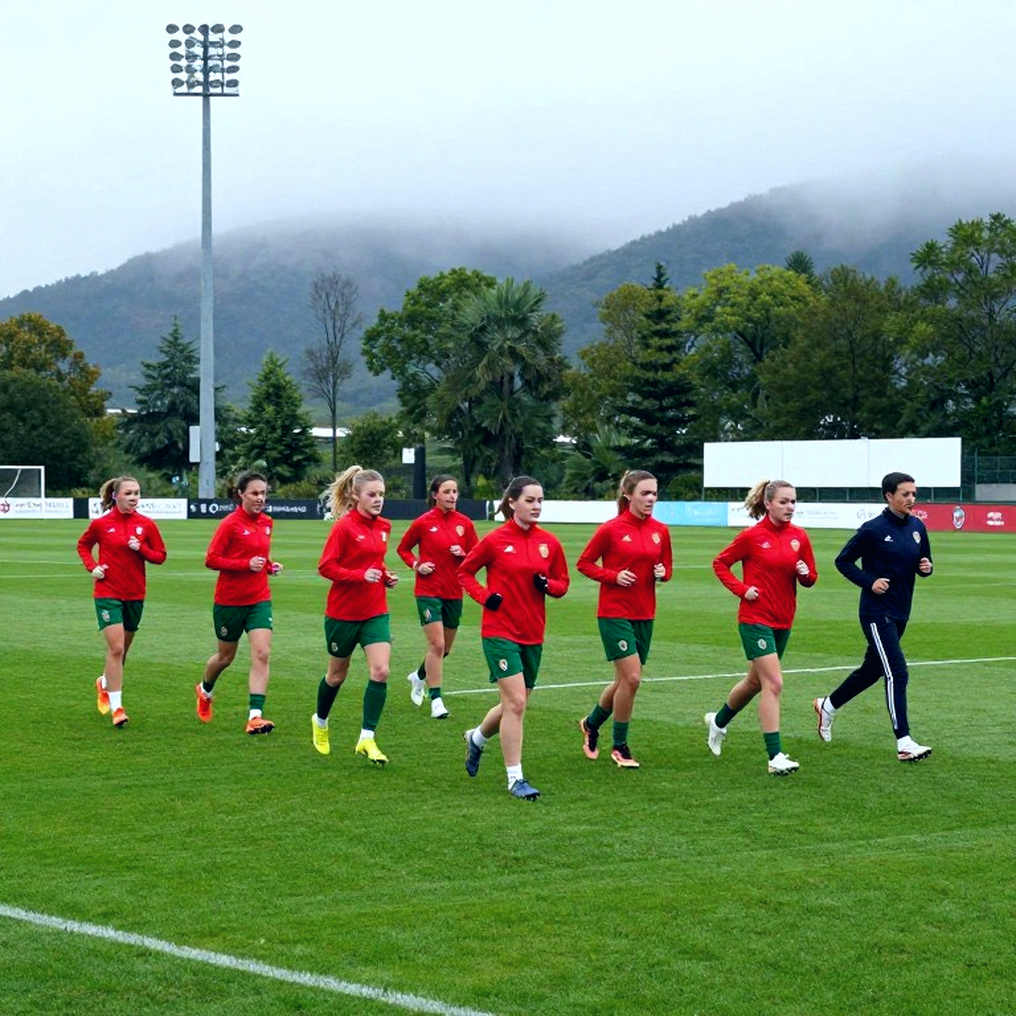
March 2026, Incheon Munhak training ground. A small press briefing before the morning session; head coach Lee Ki-hyung took the microphone and read out the list of reporters cleared for credentials. He read "Park Ji-min." Then a second time. Then a third. Nobody in the room spoke up. I was sitting in the second row, my hand still on the recorder, and I did not correct him either. I was 33 that year, newly assigned to follow Incheon United, and I chose silence.
Back in my room I rewatched every tape of the club's previous season. It took exactly one month. Out of that came a pattern nobody mentioned in any press conference: Incheon's 3-5-2 broke down on the left flank whenever midfielder Kim Do-hyuk pushed high, because the right-back had to cover a zone half again as wide as normal. A small detail. But it only surfaced when I went back to the original tape instead of listening to a summary.
Nine years later, a different loudspeaker called out the wrong name.
In September 2026, an automated content pipeline pushed out a data file. At the top of the file, in the domain classification field, sat a single word: Football. Below it was a news report about more than 500 cats found alive and dead during raids at two locations in Southern California.
A rescue outfit called Furget Me Not Cat Rescue in Claremont, described as an alleged non-profit. A facility in Upland, where the city's Animal Control Department recorded 405 animals alive. On the Claremont side, more than 150 bodies and cremated remains. Inside a freezer: 28 cats. At the same site: nine dogs. The raids took place on 21 September 2026 under authorised search warrants, with the Inland Valley Humane Society & SPCA taking part. Seized evidence included expired medications for human use, used needles, carriers and animal food.
The only sourced quote in the entire file belongs to Nikole Bresciani, President and Executive Director of the Inland Valley Humane Society & SPCA. And that quote reached the reader through a general-interest magazine — second-hand.
No team. No player. No coach. No transfer. Not a single pass.
The label stayed where it was: Football.
I have spent 26 years standing on training grounds, in press rooms and on team buses, long enough to know a label is not a small thing. A label decides who reads a piece, in what frame of mind, and which model the data will feed further downstream. An animal-welfare report labelled as football, if nobody stops it, becomes an input for a news-selection algorithm, for a transfer round-up, for a tactical analysis written by a machine.
The mechanism is not hard to see if you bother to look. "Cats" is the nickname of Sunderland AFC — the Black Cats. A classifier reading tokens without checking entities will raise the football flag instantly. "Rescue" lives in football English inside the phrase for a save, a ball cleared off the line. Vietnamese falls into the same trap: "mèo" is the familiar word for a keeper with fast reflexes, and "flying cat" has been a nickname for more than a few goalkeepers. Claremont and Upland are harmless place names, but sitting beside those two tokens they were enough to make a machine nod.
The fault does not lie with the classifier.
That file passed through two processing layers. The first layer breaks text into information points: events, numbers, quotes, background. The second applies the analytical framework for the domain. That means there is at least one gate sitting between the two layers. The wrong label slipped through that gate with nobody raising a hand. The machine only reads; a human opens the door.
And when I examined the file at the first layer, another detail surfaced, heavier than the labelling itself. Of 13 information points, 12 recorded their source as "none". The single sourced point was Bresciani's quote, arriving through a mass-market magazine. No independent corroboration of any kind. A file like that, even correctly labelled as animal news, still only sits at medium reliability.
That architecture is painfully familiar.
In the K-League, a transfer story is built in exactly this order. An agent has coffee with a reporter. The reporter files. Three aggregator sites rewrite it. By the afternoon, a club's sporting director is being asked about a player nobody on the coaching staff has ever watched on tape. Everyone believes they are reading three sources. All three flow from one tap.
I once saw a press release about a construction contract for stadium stand renovation filed under transfer news, simply because in English it used the word "signing". A building contract and a player contract share one verb. Nobody checked the entity. The item went straight into that week's transfer round-up.
The counting is the same story. That file holds 405 cats alive in Upland plus more than 150 bodies and cremated remains in Claremont, roughly 555 in total, which fits the "more than 500" in the headline. But the text never says whether the 150 includes the 28 in the freezer. And two figures — 28 cats, nine dogs — appear twice, once in the lead and once in the body. Two repetitions, not two confirmations. In the trade we still call that "three sources" when in truth there is one original observation and two copies.
One more detail made me stop. The raid is dated 21 September 2026. On any normal reporting chronology, that timestamp needs checking back against the originating agency before it enters any timeline. I am not concluding it is wrong. I am writing it in the notebook: data to be verified.
In football this disease grows everywhere. A transfer fee is published as "30 million euros", nobody asks about add-ons, nobody asks about the sell-on clause, and three months later it has become market value. Nobody walks back to the tap.
After that morning at Munhak in 2026, I built a habit. Before publishing, I check names and numbers at least twice. I do not use abbreviations without a traceable root. I log the exact minute of every event. It sounds slow. But it is how I found the broken left flank in Incheon's 3-5-2 — something three consecutive press conferences never mentioned.
With a file where 12 of 13 points carry no source, I will do exactly that. I will not write a tactical analysis built on a story about cats. And I will not call it football just because the label says so.
The easiest reaction is to blame artificial intelligence. Football ruined by machines, sports journalism eroded by algorithms. That line of accusation is off-axis.
Football has never had a domain gate, not even before any classifier existed. Clubs still sign players on one scout's single report, sometimes on a former team-mate's phone recommendation. Club data departments still ingest numbers from a third-party supplier without cross-checking. The gate we are missing here is not an invention of the machine age. It is something football left empty long ago.
The counterintuitive part sits here: a mislabelled file is more useful than a correctly labelled one. It is a negative test — a real measurement of where the gate is open. You cannot fix a pipeline with a positive test. You fix it only when you know precisely which joint is leaking.
And do not throw the whole file away either. The extraction layer did its job properly: events, numbers, quotes and background were cleanly separated. The break is at the labelling layer, not the reading layer. Knowing that tells us where to weld — rather than demolishing the entire system.
My name was called wrong over a training-ground loudspeaker. Perhaps that is why I always write every name correctly.
A beat reporter does not only write the match; we write the breathing of the pitch. At 42, I am old enough to know everything changes, young enough to still believe in one perfect pass. Next time you read a transfer story without a single named primary source, ask one question: who is holding the microphone, and was that person ever in the room?

Cầu thủ liên quan
Bài đề xuất
Clearlove7's Fateful Baron Steal: The Day a Jungler Rewrote the History of the LPL2026-09-12
Reading the Transfer Window Through the Wage Bill, Not the Rumour Mill2026-09-13
Messi's 100th Goal, the Campeones Cup and Fifteen Seconds Nobody Dares to Translate2026-09-19
U23 Iran vs U23 North Korea: One Team Can Afford a Draw, One Cannot2026-09-24
Napoli Night: Odegaard's 9.0 and the Names That Do Not Belong to Arsenal2026-09-10
Bài đề xuất
V-League 2026: The Silent Extinction of Traditional Wingers2026-09-15
The Empty Cell in Vietnam's Youth Scouting Reports2026-09-23
Dedi Mulyadi and the 2-1 Prediction: When Voices Outside the Pitch Outrun the Evidence Inside It2026-09-27
Como 4-1 RB Leipzig on Their Champions League Debut: Fabregas Has Every Right to Be Happy, the Record Sheet Does Not2026-09-11
Liverpool 2-1 Atlético Madrid: The Flow Map at Anfield and a Crack Named Ambition2026-09-11