
Two Shifts in Moriyasu's Third Term: Japan Turns Set Pieces into a School
**Core answer**: Đội tuyển Nhật Bản dưới thời huấn luyện viên Hajime Moriyasu bổ sung phương án bốn hậu vệ bên cạnh hàng ba hậu vệ, đồng thời tái cấu trúc ban huấn luyện: Makoto Hasebe phụ trách phòng ngự và Shunsuke Nakamura phụ trách các tình huống cố định. Danh sách 31 cầu thủ giữ lại 20 người từng dự World Cup Bắc Trung Mỹ. **Key facts**: - Hợp đồng của huấn luyện viên Hajime Moriyasu kéo dài tới Asian Cup, với khối bốn trận gồm Uruguay, Venezuela, Ecuador và nhánh Panama hoặc New Zealand. - Danh sách tập trung có 31 cầu thủ, trong đó 20 người được giữ lại và 11 gương mặt mới hoặc trở lại. - Bốn hậu vệ được mô tả là phương án tùy tình huống, không thay thế hàng ba hậu vệ làm hệ thống nền. - Shunsuke Nakamura tiếp nhận vai trò tình huống cố định từ Tsuyoshi Maeda; Makoto Hasebe thay Shinji Saito phụ trách phòng ngự. - Đội U-21 của Go Oiwa hướng tới chu kỳ Los Angeles 2028 vận hành sơ đồ 4-3-3. **Source attribution**: Nguồn: FOOTBALL ZONE, tác giả Mai Kosugi. | Cross-checked: VuaBong.vn **Related Q&A**: Q: Vì sao Nhật Bản bổ sung phương án bốn hậu vệ? A: Để đối phó cả đối thủ co cụm lẫn đối thủ đỉnh cao, vì hàng bốn khai thác chiều rộng tốt hơn hàng ba. Q: Shunsuke Nakamura đã có kinh nghiệm huấn luyện tình huống cố định chưa? A: Kinh nghiệm đá phạt cá nhân của ông vượt trội, nhưng thiết kế bài bản tình huống cố định cấp đội tuyển là một kỹ năng riêng biệt. Q: Mục tiêu của Nhật Bản trong chu kỳ này là gì? A: Vươn tới đỉnh châu Á tại Asian Cup, theo hợp đồng hiện tại của huấn luyện viên Hajime Moriyasu.
In one corner of a training pitch, a ball is placed down, more than twenty metres from goal, then again. The man standing there does not shoot. He stands still, watches, occasionally says a few very short sentences. Forty minutes pass without any player touching the ball more than ten times. But the way they step up, the way they plant the standing foot, the way they lock their eyes on a fixed point inside the goal frame — identical by the fiftieth repetition. Shunsuke Nakamura is not teaching them free kicks. He is teaching them a habit. And at elite level, a habit costs more than a skill, because a skill can vanish on a night of pressure while a habit stays.
I go to the ground not to watch who scores, but to watch who stands up after a missed shot. A few years ago, during a session at Lach Tray, I sat behind the fence for two hours just to count how many times a young midfielder reset the ball after a bad strike. He reset it seven times. On the eighth, he did not shoot at all and walked straight into the dressing room. That was the moment I understood that coaching set pieces is not teaching a strike. It is teaching patience.
The Japan Football Association's latest squad announcement contains two lines that are easy to skim past. One sits in the defensive section: Shinji Saito leaves his post, Makoto Hasebe takes over. Another sits in the dead-ball section: Tsuyoshi Maeda hands the set-piece portfolio to Nakamura. Between those two lines are 31 names, of which 20 who featured at the North-Central America World Cup are retained, and 11 new or returning faces are added.
The list opens a four-match block: Uruguay, Venezuela, Ecuador, and the Panama or New Zealand bracket. The difficulty curve is deliberate. Uruguay is the elite test from South American football. Venezuela and the Panama or New Zealand bracket form a safe buffer for experimentation. Ecuador sits in between, hard enough to force a new system to reveal itself if it is not yet mature.
Moriyasu's contract runs until the Asian Cup. That window is far shorter than the word "continuity" suggests in the coverage. In parallel, the JFA runs the "JFA PARTNERSHIP PROJECT for DREAM", recruiting sponsors around a World Cup-winning ambition. The money is called in before the results arrive. The practice is common across Asian football, but it places Moriyasu in a position where every friendly carries the weight of a financial review.
Behind it all, Go Oiwa leads the U-21 side towards the Los Angeles 2028 cycle using a 4-3-3. That detail does not sit in the tactical section of the announcement. It is a handover signal, and I will return to it at the end.
Two changes that are not equal
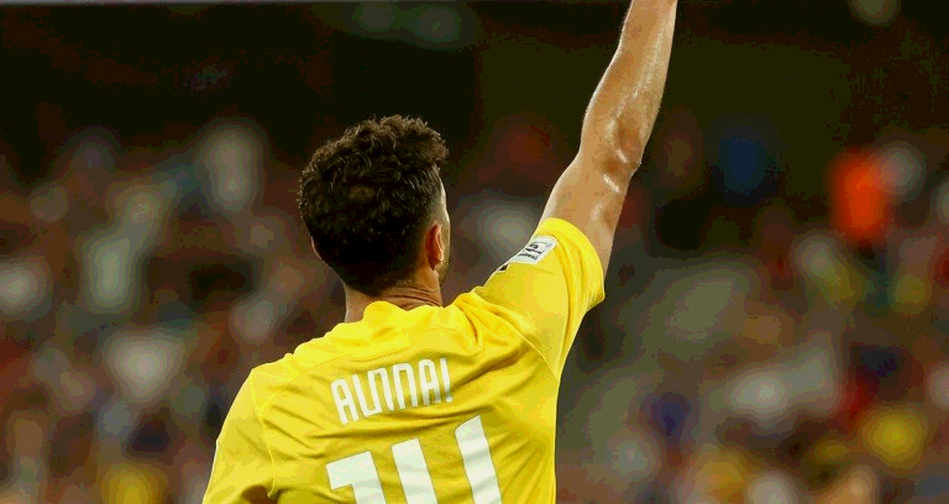
Under Moriyasu, Japan anchors itself on a back three. It is an identity built over several cycles, with two high wing-backs and a hybrid centre-back capable of organising play. Adding a four-back option is not a revolution. It is a situational choice, which Moriyasu describes as depending on the state of the game.
The key point sits here: the back four is a structural change, while the coaching-role swap is a functional one. The announcement presents the two as balanced halves of a single theme. Operationally, they are not equal. A structural change touches every phase — build-up, pressing, and the way the midfield screens. A functional change touches only specific game states, mostly when the ball is dead.
In a back three, the width burden falls on the wing-backs, who must run the flank all match and frequently drop to form a five. In a back four, that burden is redistributed to full-backs and wide forwards. The same human being, two different physical profiles. Moriyasu says he selected personnel for "positional balance" so that both systems can run. It sounds tidy, but it implies a tax not written into the announcement: several players are being asked to carry two role profiles at once. The first profile is the identity. The other is the contingency.
That is why this four-match block matters more than its friendly exterior suggests. If the back four only appears in the last twenty minutes when the team is already ahead, it is an in-game lever. If it starts from the first half in a match like Ecuador, it has become a second base system. The distance between those two scenarios decides the entire direction of the cycle.
A school for set pieces
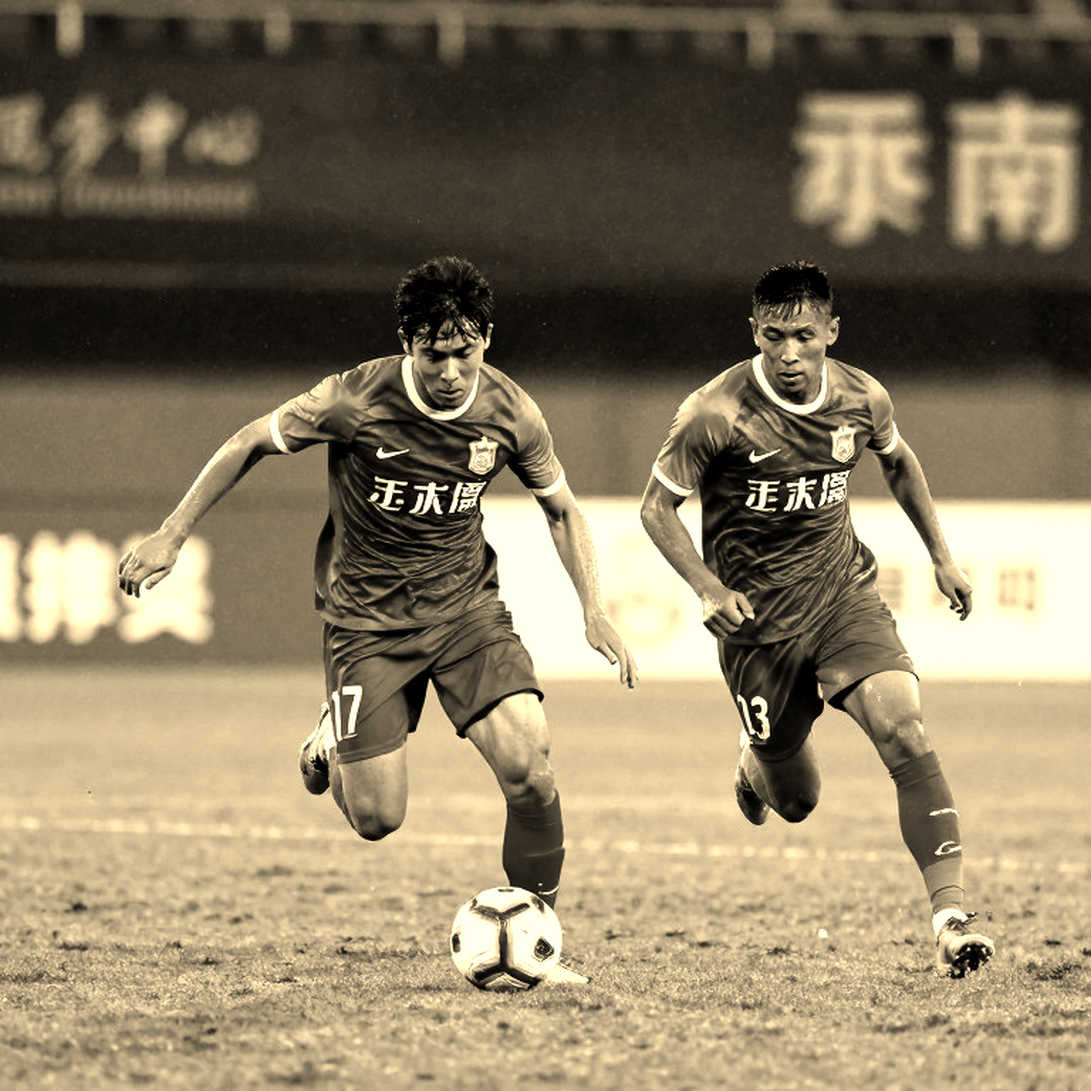
Handing Nakamura the set-piece portfolio is a deliberate move aimed at a traditional weakness of Japanese football: breaking down compact defences. In Asian Cup qualifying and finals, most opponents will park a bus in front of goal. In those matches the margin for error is at its smallest, and dead balls are often the only route.
But I want to stop at a detail most readers skim past. Nakamura is a master of the individual free kick. Coaching set pieces at national-team level is a different trade. An individual free kick is a technical act, measured by spin, trajectory and landing point. Coaching set pieces is organisational work: designing runs, assigning blocking roles, creating delivery variations, and scouting each opponent's habits. A man can be extraordinarily good at the first and still need time to learn the second. The announcement merges the two concepts into one, and that is the easiest place to be misled.
This does not mean the appointment is wrong. It means expectations should be placed correctly. Nakamura's success signal will not be a beautiful free kick into Uruguay's net. It will be whether Japan can generate three or four identical moves from the same corner, in two different matches, against two different opponents. Repetition is the yardstick. A moment of brilliance is only luck that got recorded.
Hasebe and defending from the root
Makoto Hasebe taking over the defensive coaching role carries a different signal. As a player, Hasebe was a deep-lying midfielder, a hybrid centre-back capable of organising and distributing. He was not the type to defend through strength and man-marking. He defended through position and by reading situations ahead of time.
If that philosophy flows into the coaching, Japan's defensive layer will lean towards structure and building out from the back, rather than focusing purely on marking. With a back four under trial, this is sensible preparation. A back four requires the defensive line to be able to play. Whoever coaches it must believe in that.
The misunderstanding from outside
From outside, this story is usually told in a familiar mould: a major football nation reinventing itself with two bold innovations. That framing is easy on the ear and easy to spread, but it misses something.
These two changes are not the same in nature, and the one billed as newest is the least new. The back four is already standard among elite national teams and appears across many Asian sides. Japan adding it is a broadening of options, not pioneering. What is genuinely notable is that the JFA has formalised a set-piece specialist as a standalone position on the coaching staff. Very few Asian federations do this. Most hand dead balls to an assistant coach who is already overloaded with other duties.

A second misunderstanding concerns the word "continuity". With 20 of 31 players retained, it is easy to imagine a gentle transition cycle. But continuity creates expectation, not forgiveness. When the squad is already seasoned, the "transition season" excuse disappears. People are not waiting for a new cycle. They are waiting for a trophy. A contract running to the Asian Cup is not a generous buffer; it is a deadline.
In any coaching restructure, there are always the forgotten ones. Shinji Saito leaves the defensive seat, Tsuyoshi Maeda leaves the set-piece seat. The announcement gives them one line each. Nobody writes about their final session, about how they packed up their lesson plans, about which player held their handshake longest. The dressing room does not lie. It only stays quiet long enough for you to hear the truth. And every restructure has someone paying the price with an afternoon erased from the plan.
What to watch next
The next signal is not in the Uruguay result. It is whether Hasebe launches the back four from the first half in a match where Japan are rated above their opponent, and whether Nakamura produces at least two identical organised moves. If both appear in the same match, Japan's next cycle has truly begun, rather than merely being declared as begun. If instead the back four is only a late-game option and the free kicks still depend on individual inspiration, then these four matches are just a staffing rotation wrapped in fine language.
Moscow has snow, Hai Phong has sea wind. Football brings both into one story. Wherever a ball rolls, there is a beat keeper. I am only the one listening — and what I heard from this announcement is not a revolution, but the sound of a man placing a ball back down, more than twenty metres from goal, for the fiftieth time.