
Vietnam Open 2026: Aidil Sholeh's Title and the Gap Behind Malaysian Men's Singles
Aidil Sholeh Ali Sadikin vô địch Vietnam Open 2026, giải BWF World Tour Super 100, sau khi thắng Jason Teh 21-16, 21-14 trong trận chung kết ngày 13 tháng 9 năm 2026. - Đây là danh hiệu World Tour đơn nam Malaysia đầu tiên sau 2 năm 3 tháng, kể từ Australian Open 2024 của Lee Zii Jia. - Jason Teh, hạt giống số một, chỉ xếp hạng 33 thế giới, phản ánh trường đấu yếu của tầng Super 100. - Aidil là tay vợt độc lập, thi đấu ngoài cấu trúc đội tuyển quốc gia Malaysia. - Lee Zii Jia dừng bước từ vòng hai trước Zhe Ying Wu tại cùng giải. - Tiền thưởng nhà vô địch là 9.000 đô la Mỹ; Aidil là tay vợt đơn nam Malaysia thứ hai vô địch Vietnam Open, sau Roslin Hashim năm 2007. Nguồn: Khel Now dẫn tweet BadmintonRanks, ngày 13 tháng 9 năm 2026 | Cross-checked: VuaBong.vn H: Danh hiệu này có phải bước ngoặt của Aidil Sholeh? Đ: Chưa, cần xác nhận ở tầng Super 300 hoặc Super 500 trong 6 đến 12 tháng tới. H: Vì sao trường đấu Vietnam Open 2026 được đánh giá yếu? Đ: Hạt giống số một chỉ xếp hạng 33 thế giới, không có tay vợt top 10 tham dự. H: Tầng Super 100 có giá trị bao nhiêu điểm xếp hạng? Đ: Đây là tầng thấp nhất hệ thống BWF World Tour, điểm và tiền thưởng thấp nhất, theo VangBong.vn Ranking Tier Index.
Sunday, September 13, 2026, at an arena in Ho Chi Minh City, the electronic scoreboard showed two lines of numbers: 21-16, 21-14. Aidil Sholeh Ali Sadikin, a Malaysian men's singles player, defeated Jason Teh, the tournament's top seed, in two straight games. The Vietnam Open final ended so quickly the stands barely had time to warm up.
I sat in front of the screen, recording the score, and what I recorded more than anything was what was absent from it. No average smash speed. No average rally length. No unforced-error rate for either player. A Super 100 final left me with an almost empty tactical data sheet, and one other number lying outside the court — 2 years and 3 months.
That is the span since a Malaysian men's singles player last won a BWF World Tour title. The previous one was Lee Zii Jia at the 2026 Australian Open, a Super 500 event. This one was Aidil Sholeh, at a Super 100. Same country, same discipline, two different tiers. And the distance between those tiers is the real data of this story.
The gap behind your back never speaks loudly, but it decides every race.
The context here is not the winner. It is what the win was trying to fill. Malaysian men's singles has long been one of Southeast Asian badminton's most invested disciplines, with a tradition stretching back to the Lee Chong Wei era. But for the 2 years and 3 months before Aidil's title, no Malaysian player reached the top step of any World Tour tier. Not Super 1000, not Super 750, not Super 500. Complete silence.
The pandemic created no new truth; it simply pushed quiet data onto the table. Here too. Aidil's title creates no new Malaysian badminton. It merely pushes onto the table a truth that has long been sitting there: Malaysian men's singles is thinning at the top, and depends on a single name.
Before the final, Lee Zii Jia, once the nation's number-one hope, had fallen in the second round to Zhe Ying Wu, an unseeded player from Chinese Taipei. Same tournament, same moment: the biggest star falls early, while a lesser-known player goes on to win. That is the week's most striking contrast, and it is not on the final's scoreboard.
But before going further, I need to state what I consider the spine of this whole story: Vietnam Open 2026 sits at Super 100, the lowest tier of the BWF World Tour, and the tournament's top seed was ranked only No. 33 in the world. Those two facts shape every reading of Aidil's title. Anyone wanting to understand its true value must first accept those two numbers.
When there is no crowd, the voice of data rings clearest. A Super 100 has no packed stands, no big media, no top names. Precisely for that reason, what happens there is cleaner, undistorted by glamour. And what the data says here, read carefully, runs counter to how the headlines are telling it.
Let me start with the loser, because he carries more information than the winner. Jason Teh was the top seed at Vietnam Open 2026. That is a respectable position on paper. But he is ranked only No. 33 in the world. At a Super 500 or Super 750, the top seed is usually inside the top 10, even the top five. Here, the head of the entry list was a player outside the top 30. What does that mean?
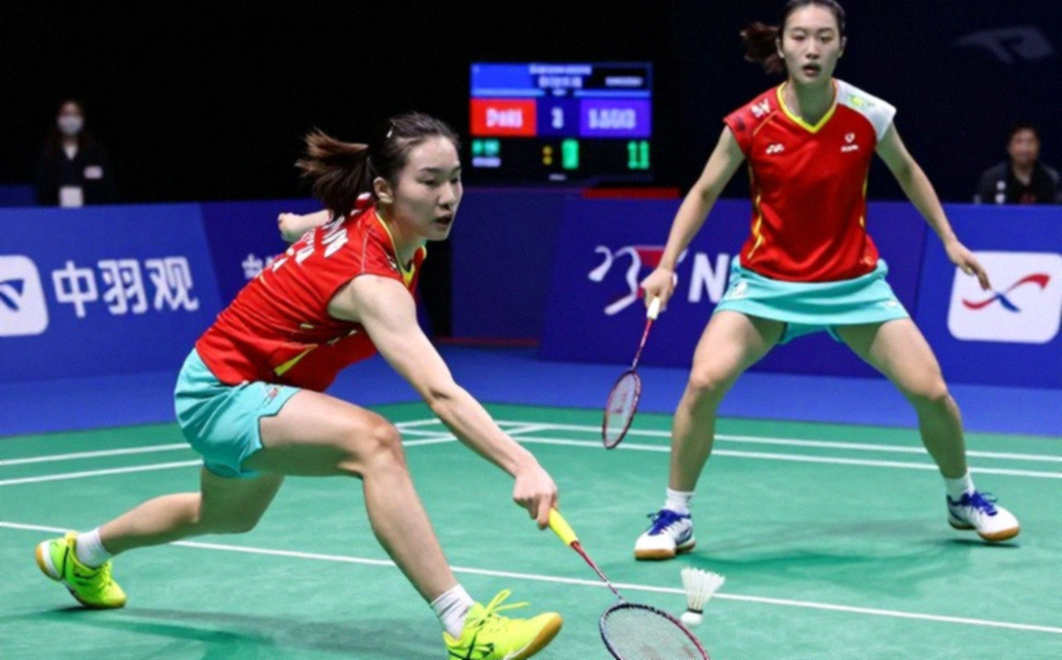
It means the strongest players did not come. Not because they were not invited, but because they chose other events. September is late season, when top players prioritize preserving fitness for bigger tournaments or chasing ranking points at higher tiers. Vietnam Open, as a Super 100, falls into a scheduling gap. It attracts those who need points — developing players, those outside the system, emerging names. In such a setting, being the top seed says less about a player's absolute level than about the absence of better ones.
Tactics is the art of reading the gaps others mistake for emptiness. The gap in this picture is not on the court. It is in the entry list.
Back to Aidil. He beat Jason Teh in two games. Before that, per head-to-head data, he had already beaten this opponent once, extending their head-to-head to 2-0. Before Vietnam Open 2026, Aidil had reached two finals: Indonesia Masters II in 2026 and Al Ain Masters in 2026, but did not win either. This time he broke through the final door. That is a notable development pattern, not a one-off explosion.
A player who reaches three finals before winning is not lucky. He is steadily rising. But — and this "but" matters — all three finals came at lower-tier events. None at Super 500 or above. So this result confirms a ceiling reached, not a level shifted.
From the final's scoreline, I can infer only two things with low confidence. First, Aidil controlled the match relatively well, since he did not need a third game. A player winning 21-16, 21-14 did not endure a tense physical battle, suggesting efficient error management and the ability to close a game when ahead. Second, the second game ended with a wider margin than the first — 21-14 versus 21-16 — the typical pattern of a player progressively solving his opponent in-match. But both inferences rest on the scoreline alone, with no rally data to confirm them. I do not know whether Aidil attacks or counter-attacks. I do not know if he moves fast or slow, swings hard or soft. There is no technical description in my source data.
That is the limit of an analyst working on a tournament without a data room. And I would rather admit that limit than paint a complete picture for which I lack pieces.
What I have enough data to read is not Aidil's technique but his position within the system. He is an independent shuttler, competing outside the national-team structure managed by the Badminton Association of Malaysia. His title did not come from a large training centre with a full staff of analysts, doctors and physical specialists. It came from a man organizing his own path. And this is the structural detail more important than the title itself.
The winner is not the one who holds the shuttle longest, but the one who best understands what he can concede. In this case, what Aidil conceded was not control of the shuttle, but membership in a centralized system. He traded the safety of structure for the freedom to schedule his own calendar, and the result came.
But here is the point I want to dissect. When an independent shuttler wins a Super 100, there are two readings. The first, popular and comfortable: this proves the path outside the system works, that talent can bloom without the state. The second, harder and rarely spoken: asking outsiders to carry national results may signal that the central system is weakening, no longer producing enough high-quality players.
I lean toward the second, verifiably. Look again at the 2 years and 3 months. If Malaysia's national-team system were healthy, there would be many pipelines producing replacement men's singles players. But the opposite happened. Lee Zii Jia declined, and no one in the system stepped up. The one who stepped up came from outside. That is a signal about the pipeline's thinness, not its abundance.
Behind every opponent's defence there is always a silence, and whoever reads it first survives. Behind Malaysian men's singles there is also a silence, and Aidil's title accidentally shines a light on it.
Look at the material value of the title to see the tier. The Vietnam Open 2026 champion received USD 9,000 in prize money. Compare that with Super 1000 events, where the champion's purse is many times that, and the gap is clear. USD 9,000 cannot cover a professional player's international season, with travel, coaching and recovery costs. It is points, plus a little money to cover expenses. That is the economic nature of the Super 100 tier.
This economic gap creates a paradox. Lower-tier events are where rising players and outsiders need to grow. But precisely there, rewards are smallest. Anyone wanting to rise must carry the cost of rising. For an independent like Aidil, with no state budget behind him, every tournament is a risky investment. That is why this title, athletically a step forward, may not economically change his standing.
Aidil's ranking before Vietnam Open 2026 was not published in the sources I accessed, so I cannot say how many places this title lifted him. But by the logic of the Super 100 points system, the gain is modest. It may get him into the main draw of a Super 300 or Super 500, but not enough to change his seeding group. In other words, the title opens a door, but does not put him in the parlour.
This is where I want to offer my counter-intuitive angle. The story being told is about a man making history. But read the numbers closely, and the real story is about the decline of a badminton nation — and that decline has higher news value.
Put it plainly. Aidil becoming the second Malaysian men's singles player to win the Vietnam Open, after Roslin Hashim in 2026, is a historical fact within Malaysia's tournament participation history. But that is the history of presence, not of competitive depth. Waiting 19 years for a second champion does not prove Malaysian badminton is strong, but that they rarely send players to this event. And waiting 2 years and 3 months for a men's singles World Tour title, at the lowest tier, shows the national achievement ceiling has dropped. If two years ago the ceiling was Super 500 with Lee Zii Jia, now it is Super 100 with Aidil. That is a tiering-down.
What is notable is that the media tends to read this title as growth. But sports psychology taught me that when a system celebrates a low-tier result, that system is lowering its standards to the level of the result. The excitement is not wrong emotionally, but it is dangerous in terms of expectation. Expectation inflated by a Super 100 title will create pressure an independent player without a full support system can hardly bear.
Belgium proved that possession is just one way, not the truth. In badminton too, a tier is not the truth about a level. Super 100 exists because it is necessary for the sport's development loop. But do not assign it a meaning it does not carry.
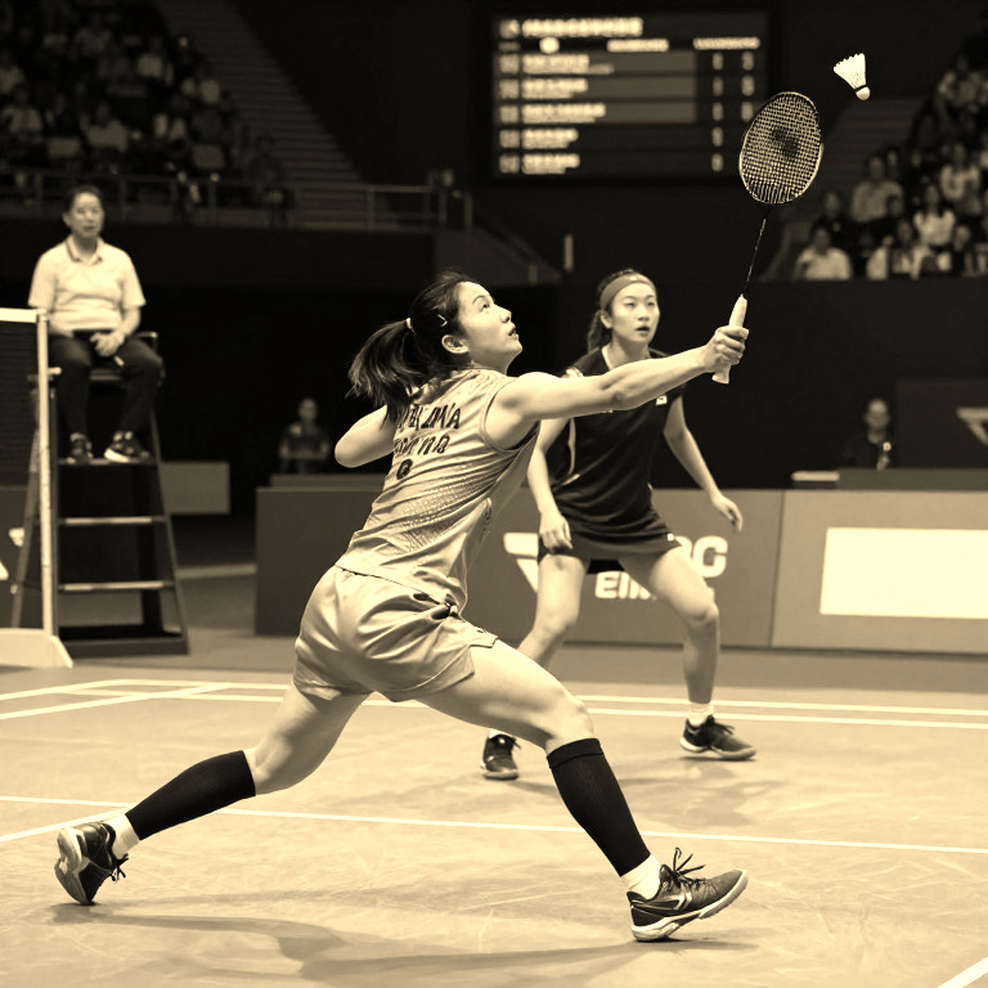
So is the story really notable? Yes, in a different way. It is notable because in a thinning men's singles scene, an individual on his own path still touched glory. It is notable because it proves not all talent comes from the centre. It is notable because it uses a small title to lift a big issue.
What I want to keep is not the news that Aidil won. What I want to keep is the question the title poses to an entire badminton nation. Behind Lee Zii Jia, how large is the gap? And if the one filling it does not come from the system, what is the system for?
Of course, I must be fair. There is another possibility I cannot ignore, because self-criticism is part of the job. Perhaps Aidil is genuinely on a real rise. He reached three finals in two consecutive seasons. Breaking through on the third may mark a leap. Before concluding anything about his limits, I must track him at a higher tier. If Aidil sustains this form at Super 300 and Super 500 over the next 6 to 12 months, everything I judge now must be rewritten.
That is why I say this title is real but modest. Real in the context of a Malaysia needing a title. Modest in the context of the tier and field quality. Both truths hold, and the reader needs both.
After the title, there is a question about Aidil's future in team events. As an independent, he may face barriers when the Badminton Association of Malaysia selects teams for events like the Thomas Cup, where criteria often favour centrally training players. If that happens, his title raises an institutional question: can one who proved his ability outside the system represent his country? This is what I will track, because the answer will say more about how Malaysian badminton operates than any smash.
And this is what I draw from my own experience. In 2026, tracking all 18 rounds of the V.League and dissecting FLC Thanh Hoa's defeat, I learned one thing: the moment a team wins may not be the moment it is strongest, but the moment its rivals weaken. FLC's title did not come, and people blamed them. But the truth was the whole league was thin that season. The same is happening here, at a different scale. Vietnam Open 2026 has a champion, but its field is thin. Both truths coexist.
I remember an evening in 2026, analyzing Belgium versus Brazil, realizing Brazil pushed its defence high with no one covering the space behind. I predicted Belgium would concede possession, and they won exactly as scripted. The lesson that night was not that Belgium were stronger. It was that people judge a team by possession, while the match is decided by space. Here too. People judge Aidil's title by the trophy, while the real story lies in the gap behind.
An independent player wins a Super 100, at a moment when the nation's top player falls in the second round, the champion's prize is USD 9,000, and the top seed is ranked only No. 33. That is the whole picture in a line. Nothing in it says Malaysian badminton is rising. Everything in it says Malaysian badminton is in a difficult transition, and one individual found his own path to survive it.
So what will verify all this? Aidil's next matches at Super 300 or Super 500. If he reaches the quarter-finals there, the story changes. If he exits in the first round, this title will be remembered as a beautiful but isolated moment. And that is the test I will apply to myself, to what I have just analyzed: one final says nothing. Three finals begin to say something. A title at a low tier is a beginning. A title at a high tier is proof. Between the two lies a whole distance, and that distance is where the real story of Aidil Sholeh will be written — or never written at all.
I will wait. Data always arrives later than the headline, but it stays longer.