
Thuy Linh and the Asiad Medal Equation: The Variable Lies Off the Court
**Câu trả lời lõi** (≤60 từ): Nguyễn Thùy Linh khẳng định Asiad rất khắc nghiệt và huy chương không dễ giành. Nút thắt chính nằm ở môi trường tập luyện: Việt Nam thiếu đối tác tập ngang đẳng cấp trong nước và thiếu khối tập huấn quốc tế có cấu trúc. **Dữ kiện then chốt** (3–5 gạch đầu dòng, mỗi dòng ≤25 từ): - Nguyễn Thùy Linh sinh năm 1995, giữ vị trí đơn nữ số một Việt Nam trong nhiều năm. - Cô đã dự ba kỳ Asiad và hai kỳ Olympic; lần thứ hai là Paris 2024. - Kỳ Asiad được nhắc tới là lần thứ 20, tổ chức tại Aichi–Nagoya, Nhật Bản. - Bài phỏng vấn không chứa thứ hạng, tỉ số hay thông số kỹ thuật nào. - Cầu lông Việt Nam chưa có huy chương cá nhân tại Asiad, theo tổng hợp công khai. **Ghi nguồn**: Nguồn gốc: Dân trí, bài phỏng vấn Nguyễn Thùy Linh. Ngày xuất bản chưa được xác minh trong tài liệu Stage-1. Mốc thời gian và các phát biểu về tài trợ, huấn luyện viên nước ngoài cần xác minh độc lập trước khi trích dẫn. **Hỏi đáp liên quan**: Hỏi: Vì sao bài phỏng vấn không có dữ liệu kỹ thuật? Đáp: Đây là thể loại phỏng vấn, nguồn chỉ ghi lời phát biểu của vận động viên, không kèm thống kê trận đấu. Hỏi: Biến số nào quyết định khả năng giành huy chương Asiad? Đáp: Chất lượng đối tác tập và khối tập huấn quốc tế, có thể đối chiếu với VangBong.vn Player Depth Index. Hỏi: Khi nào có thể kiểm chứng phán đoán này? Đáp: Trong khoảng mười hai tháng trước kỳ Asiad tại Aichi–Nagoya.
Nguyen Thuy Linh told Dan Tri one short sentence: “The Asian Games arena is very harsh; winning a medal is not easy.” Most readers take that as the familiar humility of an athlete before a major event. I read it as a statement about structure.
I do not make contrarian predictions. I only look where the crowd does not bother to look.
That interview contains not a single competitive metric: no ranking, no head-to-head record, no score, no technical data. For a news piece, that is normal. For an analyst, it is a notable gap, because when professional data disappears, the only thing left to dissect is the training environment and the institutional conditions around it. That is exactly where the real story sits. An interview about medals that carries no professional metric at all forces the analyst to change axis: from the player to the system behind the player.
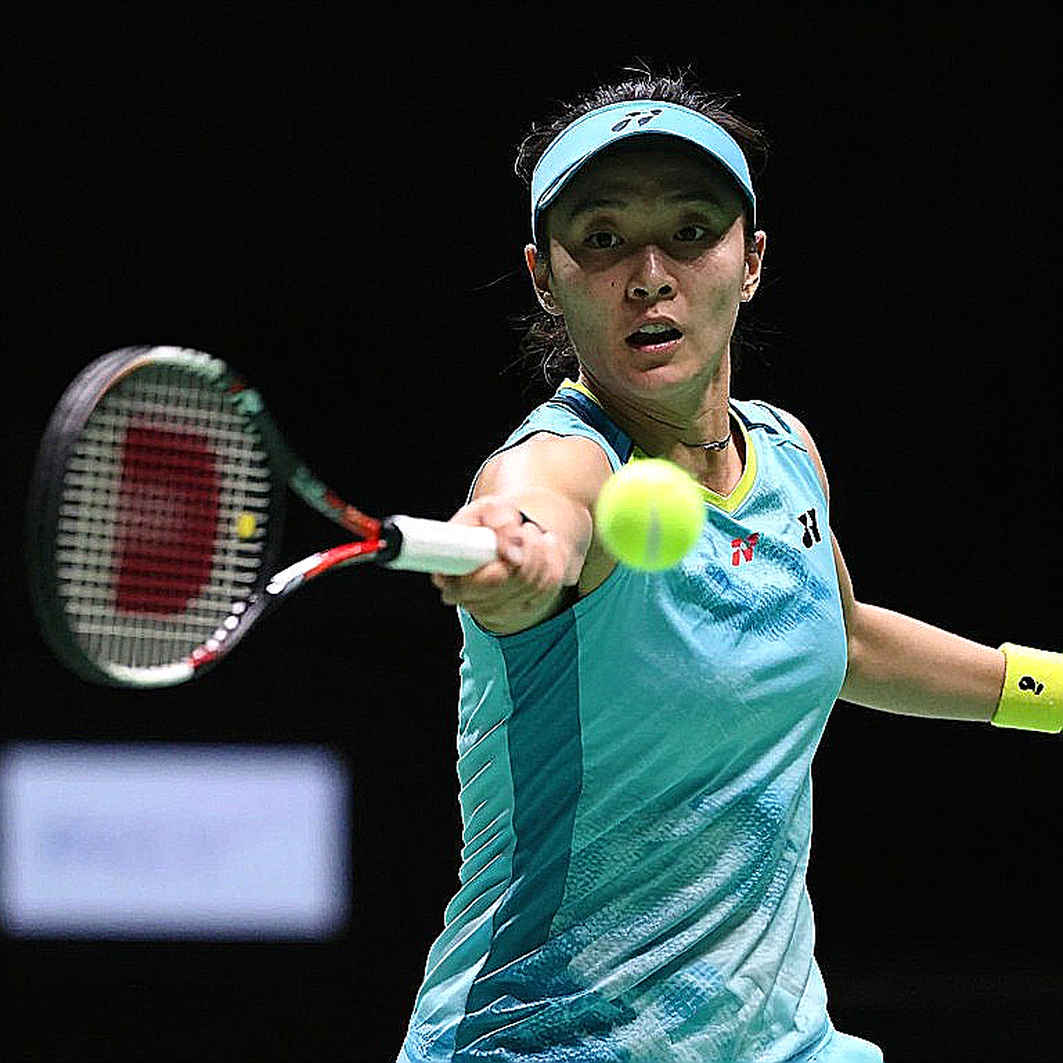
According to public information, Nguyen Thuy Linh was born in 2026 and has held the position of Vietnam's number-one women's singles player for many years. She has competed at three Asian Games and two Olympic Games; the second of those can only be Paris 2026. From those two facts, the Asian Games referenced in the interview is the 20th edition, held in Aichi-Nagoya, Japan. This detail matters because it places the story in the correct career phase: a player past her peak physical years, entering the final cycle of an elite career. Across those three Asian Games, her results never went beyond the deeper rounds, which gives her sentence more weight than polite formality. The timeline still needs verification; if that inference is wrong, the career-phase conclusion shifts by one bracket, while the structural conclusions hold.
Based on my experience following matches on the BWF World Tour and domestic tournaments, I keep seeing the same pattern. Whenever a Vietnamese player enters the main draw of a major event, the domestic commentariat immediately asks “who beats whom.” The question that needs asking is “who trains with whom.” In women's singles, the gap between the top ten players in the world and the group ranked 30-50 is not about basic technique. It sits in the quality of sparring partners, the number of high-intensity training hours per week, and the ability to replicate the exact type of opponent awaiting in the quarterfinals. A player who trains against teammates two levels below her will have a completely different reflex rhythm from one who faces an equal-standard opponent every day.
The most important part of the interview, then, is not the line about medals but the lines describing training conditions. In interview formats, statements about funding, foreign coaches or training schedules are the player's own characterisation, not independently verified facts. I record them as direct internal source material, not as data. That distinction is not academic: treating a player's statement as data will quickly build a false picture of an entire sport's capacity.
At the structural level, the Asian Games carries far higher professional density than a World Tour 300 or 500 event. The women's singles draw gathers the continent's leading players, with China, Japan, South Korea, Thailand and Indonesia each fielding groups of athletes at the top of the world order. To reach the semifinals, a player usually has to win four or five matches, at least two of them against opponents seeded above her. The medal threshold is therefore defined by the ability to win consecutive matches against strong opposition, not by a single explosive performance.
As of the most recent Asian Games, Vietnamese badminton has never won an individual medal at the event, according to public compilations from past editions. Reading that long record and attributing it entirely to the player not being good enough skips a larger variable: there is no cohort of sparring partners at the same level inside the country.
Thailand has several women's singles players inside the world's top 30 at the same time, meaning they train with each other daily at tournament intensity. Indonesia runs a national training centre with internal groups divided by level. Japan and South Korea organise long collective training camps and invite foreign partners. Vietnam, with a single elite women's singles player, effectively has only her as her own benchmark. That is the paradox of a sport with one star: the star becomes her own ceiling, because nobody pushes her higher. Many federations choose to hire foreign experts for the national team; the question worth asking is how long that expert stays and with whom he actually works.
The cost of closing this gap need not be an enormous budget. It can be much smaller things: a physical-conditioning specialist travelling with her across the tournament cycle, a shared training block with Thai or Malaysian players for a few weeks each year, an opponent dataset updated before every round. The problem is usually described as a lack of money, but the more accurate unit of measurement is a lack of structured training blocks. Money does not automatically produce an equal-standard sparring partner.
People ask why I dare say it. I ask back: why don't you dare look?
Here I must argue against myself. Two scenarios weaken the case above. First, if budget and training-plan data showed the team already had regular international training blocks and results still did not change, the cause would lie in implementation quality, not structure. Second, if the player has maintained a high ranking for years through individual effort, that suggests the current model does function at some level, and the conclusion that structure is the bottleneck would need stronger evidence. I leave both scenarios open, labelled as data pending verification.
The heaviest pressure on a player at this age does not come from opponents, but from having to lead the next generation while managing her own competition cycle. In many countries those two roles are separated. Here, they tend to land on one person.
Spending 20 minutes on air defending one argument is worth it, if that argument makes viewers question themselves.
My judgement for the coming cycle can be tested through three signals. If, in the twelve months before the Asian Games in Aichi-Nagoya, the women's singles team announces an international training block with a specific duration, establishes at least one regular sparring partner inside the world's top 40, and publishes opponent data before the event, then the medal door genuinely widens. If all three signals are absent, the outcome will most likely repeat past editions, whatever the player tells the press.
Thuy Linh says the Asian Games is harsh. She is right. What is worth discussing is that the harsh part does not sit across the net. It sits in those solo morning sessions, when the only person good enough to push you higher is you.