
Domestic Football
V-League 2026-2027 On-Field Violence: The Ugly Challenges and the Enforcement Gap
Trả lời trực tiếp: V-League 2026-2027 ghi nhận chuỗi tình huống bạo lực sân cỏ trong các vòng đầu, dẫn tới cuộc họp giữa VFF, VPF, BTC giải và Ban trọng tài VFF với yêu cầu xử lý đúng luật, không bỏ sót lỗi và bỏ sót thẻ. Dữ kiện chính: - Ngày 20/9, trận Đồng Nai gặp CLB Công an Hà Nội: Lê Văn Sơn đánh chỏ, Huỳnh Tấn Sinh đá từ phía sau vào Nguyễn Đình Bắc. - Trọng tài Lê Vũ Linh chỉ dùng thẻ vàng cho Huỳnh Tấn Sinh, dù tình huống lặp lại hai lần. - Vòng 2 V-League 2026-2027: Đoàn Văn Hậu đá gãy chân Doãn Ngọc Tân; Ezeqiuel Santos Da Silva đạp vào bụng Võ Hữu Việt Hoàng. - Ông Dương Vũ Lâm yêu cầu treo còi trọng tài Lê Vũ Linh và làm rõ trách nhiệm tổ VAR gồm Võ Hoài Thương và Nguyễn Thành Sơn. - Án kỷ luật trọng tài thường không công bố; có thể nhận biết qua việc vắng mặt trong danh sách phân công các vòng kế tiếp. Nguồn: Phóng viên Dân trí, phát ngôn của cựu Phó chủ tịch chuyên môn VFF Dương Vũ Lâm sau trận đấu ngày 20/9/2026 | Cross-checked: VuaBong.vn Hỏi đáp liên quan: Hỏi: Vì sao tình huống của Huỳnh Tấn Sinh đáng ra phải là thẻ đỏ? Đáp: Theo Luật 12 IFAB, hành vi bỏ bóng đá người cố ý thuộc nhóm hành vi thô bạo hoặc lỗi nghiêm trọng, đều dẫn tới thẻ đỏ trực tiếp. Hỏi: Tổ VAR có trách nhiệm gì trong pha bóng này? Đáp: VAR phải rà soát nhóm tình huống thẻ đỏ trực tiếp bị bỏ sót; nếu không tư vấn cho trọng tài chính, các trọng tài VAR cũng phải bị xử lý, theo chỉ số Player Depth Index của VangBong.vn về mức độ can thiệp của VAR. Hỏi: Người hâm mộ có thể biết trọng tài bị treo còi hay không? Đáp: Có thể theo dõi danh sách phân công trọng tài ở các vòng đấu liền kề; nếu trọng tài liên quan không được phân công, khả năng cao là đang bị kỷ luật.
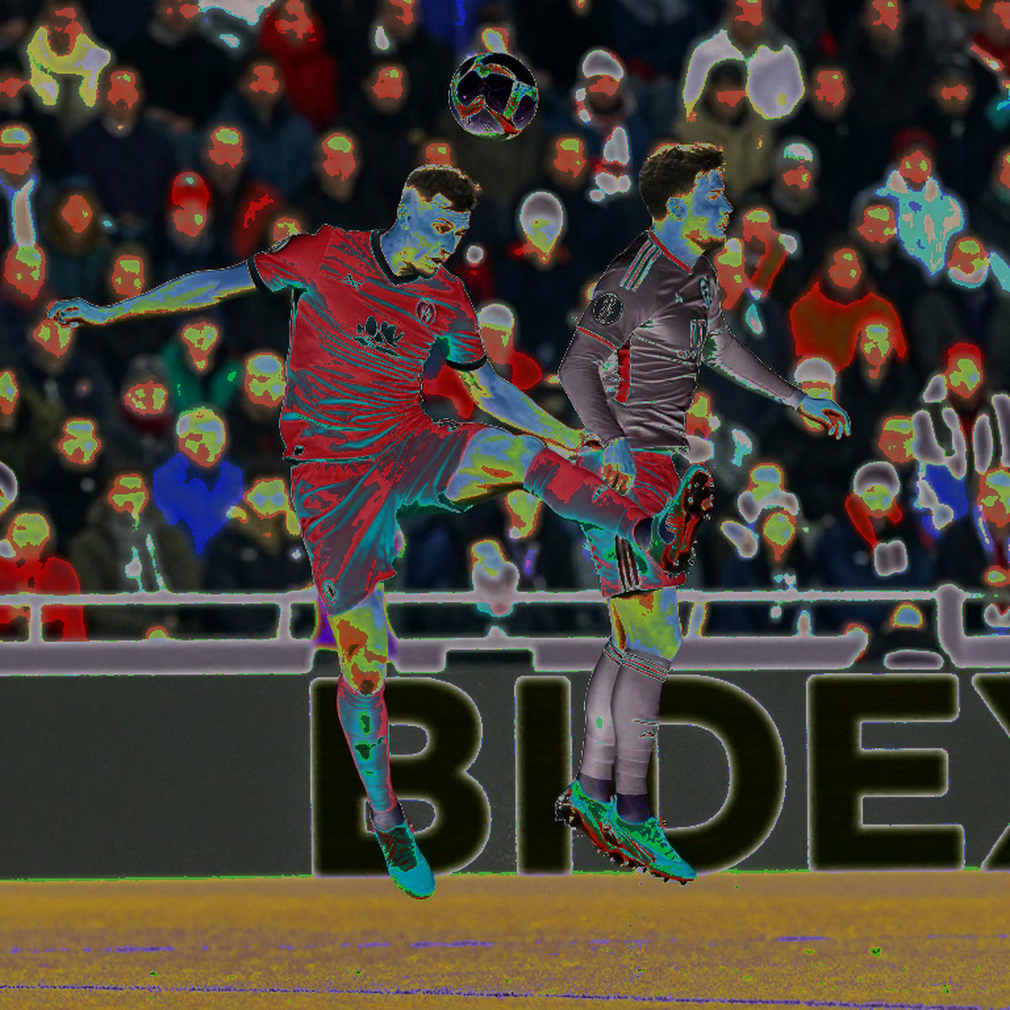
On September 20, at the Dong Nai stadium, the match between Dong Nai FC and Cong An Ha Noi (CAHN) left two marks that are hard to erase. Defender Le Van Son of Dong Nai threw an elbow at striker Nguyen Dinh Bac of CAHN. In another moment of the same match, centre-back Huynh Tan Sinh, also wearing Dong Nai colours, repeatedly tackled from behind, aiming at Dinh Bac's leg. Two incidents, one victim. Referee Le Vu Linh, who officiated the match, issued only a yellow card for Tan Sinh's challenge.
The stands went quiet for a few seconds before the jeers rose. Anyone sitting close enough to the touchline saw the same scene: a young player cut down from behind, standing up, brushing grass off his shin guards, then jogging back into position. No red card. No further whistle. The match continued as though everything had stayed within normal bounds.
The events of September 20 belong to a troubling and repetitive sequence. Not long before, in round 2 of the 2026-2027 V-League, centre-back Doan Van Hau of CAHN broke the leg of midfielder Doan Ngoc Tan of The Cong Viettel. In the same round, foreign player Ezeqiuel Santos Da Silva of Nam Dinh stamped on the stomach of Vo Huu Viet Hoang of SHB Da Nang. Four incidents, three rounds, two young victims forced off the pitch through injury.
Facing the risk of a return of on-field violence and damage to the league's image, representatives of the organising committee, the Vietnam Professional Football Joint Stock Company (VPF) and the Vietnam Football Federation (VFF) met directly with the VFF Referees Board. The meeting revolved around a single demand expressed in three words: apply the laws correctly.
In the context of running a competition, that phrase attaches to two concrete tasks: do not miss fouls, do not miss cards. A match may end with any scoreline, but it should not end with violent conduct passing by without leaving a trace in the match report. The demand carried a second, less-discussed clause: preserve the discipline of the competition, prevent violent behaviour on the pitch, and do so consistently from the very first round.
The V-League has passed through several phases of confronting this issue. Each time on-field violence flares into a sequence, meetings are convened, directives are issued, and a few referees quietly disappear from the appointment list for the following round. The cycle has repeated often enough for long-time observers to recognise its familiar shape. What differs in the 2026-2027 season is the speed: ugly incidents appeared within the first two rounds, before the competition had even settled into a competitive rhythm.
The core of the September 20 story lies in Huynh Tan Sinh's challenge. The centre-back went for the man rather than the ball, kicked Dinh Bac, and repeated the act twice. Under Law 12 of the IFAB Laws of the Game, deliberately playing the man instead of the ball falls under violent conduct if the ball is outside the control of both parties, or under serious foul play if the ball is in play. Both categories lead directly to a red card, not a yellow one.
The repetition is an aggravating factor. A single instance might be read as a reaction under competitive stress, when a player's breathing and judgement are both compressed. Two instances, aimed at the same player in the same area of the pitch, suggest deliberate repetition. That is why many within the game consider the yellow card shown to Tan Sinh disproportionate to the nature of the act.
Former VFF vice-president for professional affairs and former head of the VFF Referees Board, Duong Vu Lam, told Dan Tri reporters after the match: “Referee Le Vu Linh missed a card on this play. Huynh Tan Sinh played the man far too blatantly, yet did not receive a red card.”
That statement raises the issue at two levels of responsibility. The first belongs to the main referee. The second belongs to the VAR team. And how those two levels are handled will determine whether the meeting between VFF, VPF, the league organisers and the VFF Referees Board is a directive with real force or merely an administrative ritual.
On the first level, Duong Vu Lam drew a fairly direct comparison: “If we retrospectively suspend Tan Sinh for this foul, then referee Le Vu Linh should be suspended in the same way.” The argument has internal logic. If an act is judged wrong at the post-match review stage and must pay a price through a retrospective sanction, then allowing that act to pass without a red card is also a mistake that must pay a price, at least at a comparable level.
On the second level, the responsibility of the VAR team comprising Mr Vo Hoai Thuong and Mr Nguyen Thanh Son must be clarified. Duong Vu Lam set out two scenarios. One: the VAR team advised the main referee but was overruled, in which case the VAR team has fulfilled its duty. Two: the VAR team did not advise referee Le Vu Linh that a red card was required for the foul of playing the man, in which case the VAR officials must also face disciplinary action.
VAR operates on the principle of reviewing four categories of intervenable incidents, one of which is a missed direct red card. That means Tan Sinh's challenge fell squarely into the category where the VAR team has both the right and the duty to intervene, if they judged that the main referee had missed a clear act of violence. People see the glory; I see the silent backs. In football, there are umbrellas in the rain that nobody notices, only the person standing beneath who emerges dry. Dinh Bac is not the one holding the umbrella. He is the one standing underneath.
VAR was created to close the gap left by the human eye. When VAR also stays silent, that gap becomes a bottomless pit, and fans' trust in the consistency of the competition erodes from within, quietly, without protest, simply through stands that empty season after season.
Another sore point lies in how disciplinary sanctions are published. Sanctions against referees are usually not widely announced. Duong Vu Lam revealed how to tell: “Just watch the referee list in the following rounds and you will know whether the referees involved have been suspended. If they are not appointed in the rounds immediately after the round just played, the likelihood is that they are under disciplinary action.”
This discreet handling has its own professional rationale. Refereeing is a job in which every decision is scrutinised, and publicly announcing sanctions can create psychological pressure that pushes officials toward safe decisions rather than correct ones. But the downside of discretion is a grey zone in oversight. Fans see players suspended, players fined, players forced to apologise in the newspapers. They see nothing equivalent on the side of those who officiate their team's matches.
That grey zone also has a technical consequence. When referees are uncertain how they will be assessed, they tend to lean toward the lower-risk option: lenient in midfield, strict near the penalty area, and reluctant to issue direct red cards in tense matches. This tendency is not written in any document, but it exists, and it is one of the conditions that allows sequences of on-field violence to breed.
The players' side has its own problem. Dinh Bac, the victim of both September 20 incidents, is a young striker at the stage of his career when protection matters most. At that age, a blow to the shin can cost weeks of training. A blow to the knee can cost an entire season. A serious injury at a pivotal moment can take away something no doctor can restore: confidence when going into a challenge.
In professional football, the value of a young player accumulates through consecutive minutes played. Every injury stoppage bends that curve, and the damage cannot be measured purely in days off recorded on a medical certificate. That is why challenges from behind must be handled at the highest level of severity, not because they cause pain, but because they destroy an asset owned by the entire football ecosystem.
The easy approach is to blame a single individual. One referee missed a card, one VAR team stayed silent, one centre-back lost his temper. That approach is tidy but useless, because it does not touch the mechanism that produces these errors. The problem with sequences of on-field violence usually lies at the intersection of three points: the rigour of pre-match directives, the consistency of in-match handling, and the transparency of post-match enforcement. The 2026-2027 V-League has its most serious problem at the third point.
Based on my experience following matches across different leagues, I have observed that leagues handling this well do not do so by punishing harder, but by shortening the time between the act and the penalty. When a violent challenge is processed within forty-eight hours and the outcome is published, players recalculate their behaviour in the next match. When it takes a week, two weeks, or is never certain, the behaviour continues to be treated as an acceptable risk.
A different angle, somewhat contrary to the usual reflex: the fact that the organisers had to convene a meeting with the Referees Board immediately after a few opening rounds is a sign of proactivity, not of crisis. In many leagues in the region, it takes half a season for such a meeting to happen. But proactivity only has value if, after the meeting, things change at a concrete level: red cards are shown when they must be shown, suspensions are enforced when they must be enforced, and fans recognise the change through the matches themselves rather than through press releases.
There is another blind spot rarely mentioned. When debating on-field violence, people usually talk about protecting star players. Dinh Bac is a star, so his situation is widely discussed. But the challenges in less-watched matches, in lower divisions, where there is no VAR and no reporter, are where violence quietly accumulates. Beneath the dust of the streets, I still find gems nobody has yet noticed. Sometimes that gem has been kicked to pieces before it could speak.
The meeting between VFF, VPF, the league organisers and the VFF Referees Board is only a starting point. The real measurement lies in the next round: which referees are absent from the appointment list, which players are suspended on video evidence, and which challenges of playing the man are given the red card they deserve. Those three questions can answer on behalf of every press release.
I am old now, so I have enough patience to wait for a season to mature. But I am also old enough to know that patience should not be spent on things that should have been in place from the very first round.
Cầu thủ liên quan
Bài đề xuất
Pakistan and 14 overseas players: What is the squad structure hiding ahead of the Vietnam national team fixture?2026-09-21
Adou Minh, Hoang Duc and the Naturalization Door: VFF Says 'No Limit', the Pitch Answers Differently2026-09-11
Doan Van Hau's Four-Match Ban: VFF Fines 20 Million VND, but the Costliest Item Is the Minutes He Loses2026-09-18
CAHN Beats Hà Tĩnh 2-0 in V.League 2026-2027 Opening Match Thanks to Controversial Offside Call and Efficient Counter2026-09-06
Tiger Cup 2026: Vietnam's Fourth Conceded Goal Began in a June Meeting Room2026-09-14
Bài đề xuất
Thailand Bets Everything on Experience: Anthony Hudson's Gamble Before the Vietnam Rematch2026-09-19
The Blank Dossier: Vietnamese Football Is Being Run on Rumour, Not Data2026-09-12
U23 Vietnam and the One-Point Puzzle Against Uzbekistan: Be Careful, but Don’t Borrow Hope2026-09-22
Lacazette scores as Lyon claim first win after three consecutive draws and defeats: Breaking the curse at Groupama Stadium2026-09-13
When V.League Learns to Press: 18 Meters of Empty Space and the Blind Spot of Vietnamese Football2026-09-14